
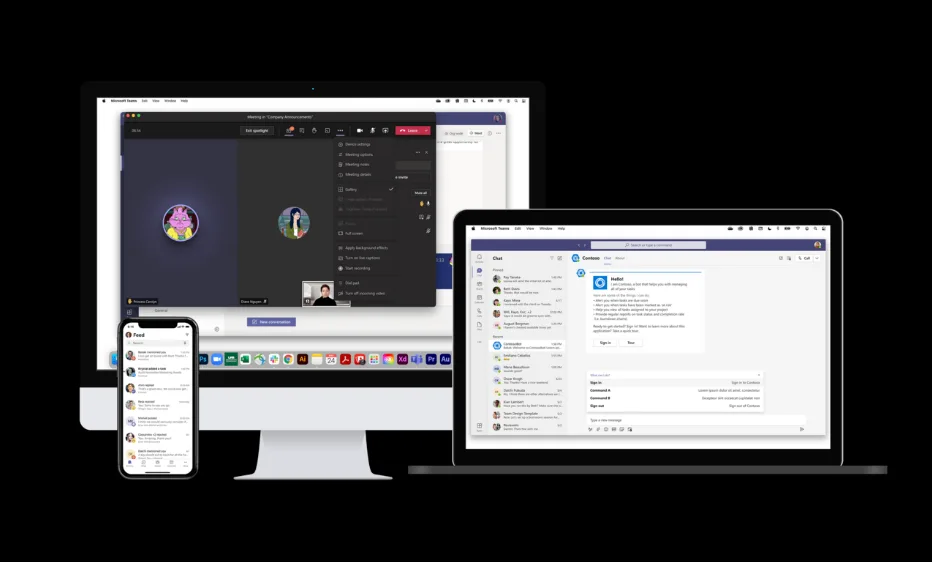
If we’ve set up Microsoft Teams calling for your business, here’s a quick guide to the basics: configuring your call settings, and the different ways to start a call.
For the full picture of what we set up and manage as part of your Teams calling service — including phone numbers, call routing, and voicemail — see our Microsoft Teams Calling page.
Setting up your call preferences
Most of the core configuration — phone numbers, calling plans, and call routing — is handled by us as part of setup. There’s also a level of personal configuration available to each user.
In Teams, go to Settings > Calls. From here you can set:
- How incoming calls are handled, including forwarding to a colleague
- What happens if you don’t answer, and how long before it redirects
- Voicemail preferences and greetings
- Ringtones for different call types
If you need someone else to make or receive calls on your behalf — for example while you’re away — this is configured under Settings > General > Delegation.
Ways to start a call
Teams gives you several ways to start a call, useful once you know where to look:
- From a chat. Open a one-to-one or group chat and select the call icon. These calls stay private and don’t appear in your team channels.
- From your contacts. Go to the Calls section, select Contacts, and call directly from your list.
- From call history. Your previous calls — incoming, outgoing, and missed — are listed under Calls, with the option to call straight back.
- From the dial pad. If your business has a calling plan set up (which we configure as part of your Teams calling service), you can dial any number directly from the Calls section.
- From speed dial. Add your most frequent contacts to speed dial for one-tap calling.
Need help with your Teams calling setup?
If you’re having trouble with call quality, configuration, or want to add features like auto-attendants and call queues, get in touch — this is handled as part of your managed support contract.
